Australia's automotive market is becoming more crowded. More brands and vehicles are competing for attention, buyers are moving across more channels before making a decision, and dealerships have more ways to reach them.
For dealerships, the challenge is increasingly about deciding where to focus: how to understand a local market, turn national brand strategy into relevant local activity, get campaigns into market quickly and determine what is actually producing results. These questions reflect broader shifts already emerging across automotive marketing in 2026.
Those same challenges shaped the AADA 2026 panel Winning Locally: Making Your Dealership Marketing More Effective, moderated by Sesimi CEO Andrew Baker. Rather than focusing on the next marketing trend, the discussion explored how dealerships can make better decisions about customers, channels, creative, spend and measurement.
The conversation pointed to a broader shift: dealer marketing is becoming less about producing more campaigns and more about making better local marketing decisions.
| AT A GLANCE |
| Dealers who understand their local market make better decisions about customers, channels and marketing investment. |
| The strongest dealer marketing combines national brand consistency with meaningful local relevance. |
| Better marketing comes from choosing the right opportunities, executing efficiently and using results to improve the next decision. |
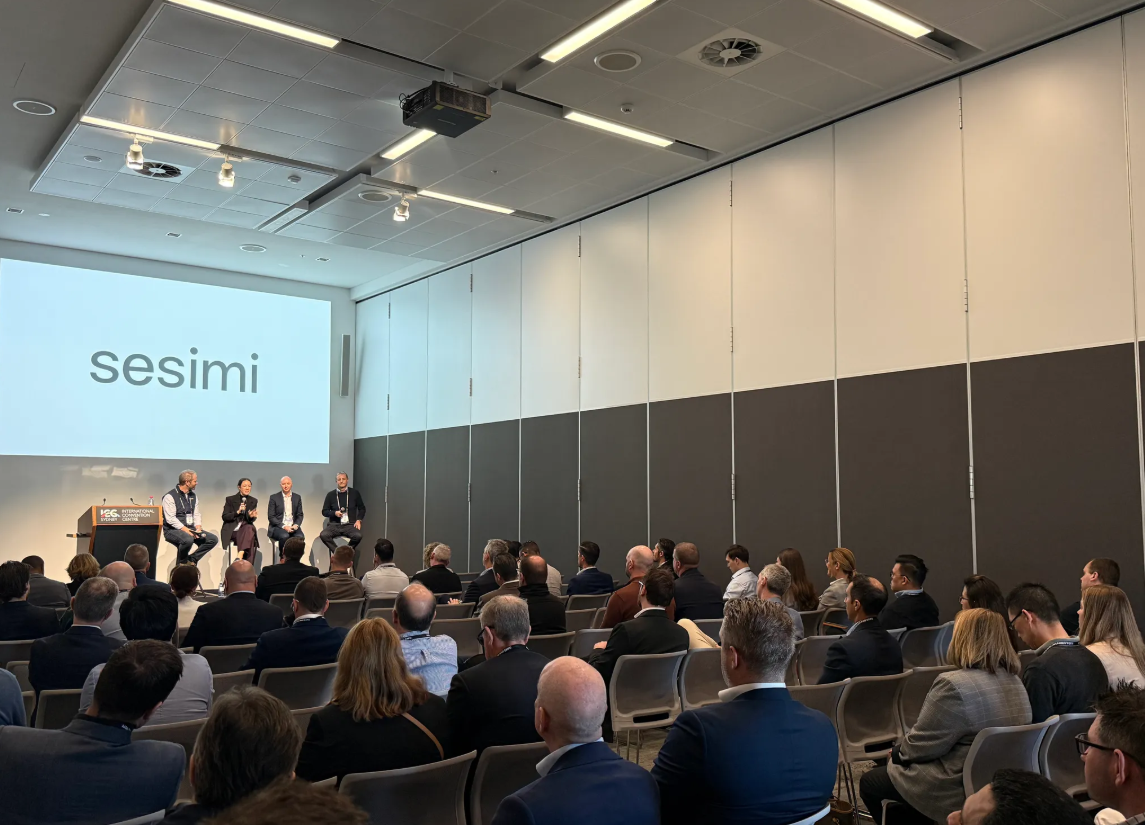
Andrew Baker moderates Sesimi's AADA 2026 panel, Winning Locally: Making Your Dealership Marketing More Effective, exploring how dealerships can make better local marketing decisions through customer insight, brand consistency and smarter execution.
1. Local Market Knowledge Is Becoming More Valuable
Every dealership represents a national brand but competes in a local market shaped by its customers, competitors and demand.
Dealers already have much of the information needed to understand that market. Customer databases, sales history, enquiry data, campaign performance and product lifecycle information reveal:
- Which audiences are buying locally
- Which models, offers and messages generate interest
- Which customers are approaching replacement or warranty milestones
- Which geographic clusters generate the most business
- Which channels are reaching the right customers
Throughout the AADA discussion, first-party data emerged as the foundation for better local marketing decisions. Rather than selecting channels first and then finding an audience, dealerships can use their customer base and PMA data to identify demand before committing marketing investment. This aligns with the industry's broader shift towards more targeted, data-led dealer marketing.
Those insights extend beyond media buying. They can inform sponsorships, local partnerships, B2B activity, inventory priorities and the offers a dealership takes to market.
The competitive advantage is not having more data. It is using existing customer and market knowledge to make better decisions about where to invest, what to promote and who to reach.
2. Brand Consistency and Local Relevance Have To Work Together
OEMs build the brand. Dealers make it relevant to their market.
The strongest dealer marketing applies a consistent national strategy while giving dealerships the flexibility to adapt approved campaigns for local audiences. That balance between central control and local flexibility is becoming increasingly important for local area marketing across distributed networks.
National teams define the elements that should remain consistent:
- Brand identity
- Core messaging
- Product information
- Campaign strategy
- Mandatory content
Dealerships adapt the elements that change locally:
- Dealership information
- Inventory
- Local offers
- Geographic context
- Community activity
- Channel-specific content
One practical example discussed at AADA was imagery. National creative may be professionally produced, but local photography, locations or messaging can make the campaign feel more relevant without changing the brand itself.
Local relevance should build on the national campaign, not replace it.
Definition: Local Marketing Effectiveness
Local marketing effectiveness is a dealership's ability to make better local marketing decisions. It combines customer understanding, strategic investment, on-brand execution and measurement to improve every campaign.
3. Dealer Marketing Will Be Judged More Closely On Efficiency
Dealer teams now manage paid media, social, search, email, websites, marketplaces, CRM communications and events. More channels create more opportunities, but also more decisions about where time and budget should go.
That was a recurring theme throughout the AADA discussion. Marketing budgets are under pressure, making efficiency just as important as creativity.
A clear local strategy helps dealers invest where they are most likely to see results. Broad-reach channels still have a role, but first-party data, digital targeting and techniques such as geofencing can reduce wasted spend by reaching customers who are more likely to buy.
The same principle applies to production. Time spent searching for assets, waiting for approvals or recreating existing campaigns is time not spent marketing to customers.
Efficient dealer marketing reduces waste in both media investment and campaign production, giving teams more capacity to focus on the work that influences customer decisions.
4. Faster Local Execution Will Become A Competitive Advantage
Inventory changes. Incentives move. New models arrive. Fuel prices shift and competitors launch new offers. Dealers need to respond while those opportunities still matter. But as the AADA discussion highlighted, speed does not mean reacting to everything. The first decision is identifying which opportunities are worth acting on.
A rise in fuel prices, for example, may justify promoting fuel-efficient or EV models rather than simply matching a competitor's finance offer. Better decisions create better campaigns. Once that decision has been made, execution becomes an operational challenge.
Every design request, approval and spreadsheet adds time between identifying an opportunity and reaching customers. Governed workflows reduce that friction by giving dealers access to approved campaigns they can adapt locally.
Sesimi’s Creative automation helps dealerships customise approved content for different markets, channels and audiences without compromising brand quality or rebuilding campaigns from scratch.
For OEMs and dealer groups, that helps balance brand control with greater dealer speed. The competitive advantage is not producing more assets. It is identifying worthwhile opportunities and getting the right campaign into market before the opportunity passes.
5. Measurement Needs To Feed The Next Marketing Decision
Dealerships can measure impressions, clicks, leads, enquiries, conversions and campaign engagement. The challenge is identifying which metrics should influence the next campaign.
That theme came through consistently at AADA. Many dealers are active across multiple channels without knowing which activity is generating quality enquiries and which is simply consuming budget.
Effective local marketing creates a feedback loop:
- Understand the local market and establish a clear objective.
- Select the appropriate campaign, audience and channels.
- Execute consistently across the relevant touchpoints.
- Measure the outcomes that matter.
- Apply those learnings to the next campaign.
For enquiry-led campaigns, that often means looking beyond clicks and leads to test drives and eventual sales, recognising that automotive purchase decisions happen over weeks or months rather than a single interaction.
Across a dealer network, those insights become even more valuable. OEMs and dealer groups can identify patterns across locations while recognising that each local market behaves differently.
That becomes much easier when campaign creation, local execution and performance data are connected. A clearer view of what was produced, what dealers actually used and what delivered results helps every campaign become more informed than the last.
“Dealer marketing is becoming less about producing more campaigns and more about making better local marketing decisions.”
The Future Of Dealer Marketing Is Local, Connected and Measurable
AADA 2026 reinforced a practical shift in dealer marketing. Competitive advantage will come less from producing more campaigns and more from making better local marketing decisions.
Dealers that perform well understand their local market, build on national campaigns, respond to the opportunities that matter and measure what works. Better workflows simply make those decisions easier to execute.
Technology will continue to accelerate that process. AI is becoming another way customers research and compare vehicles, while connected marketing systems are making it easier to plan, execute and measure local activity.
For OEMs and dealer groups, the opportunity is to create marketing environments where brand governance, local autonomy and performance data work together. For dealers, it means spending less time producing marketing and more time deciding what their market actually needs.
That may be the clearest signal from AADA 2026: better dealer marketing starts with better local decisions.
FAQ
What is the biggest challenge facing dealer marketing in 2026?
The biggest challenge facing dealer marketing in 2026 is deciding where to focus time and budget as customers, channels and competition continue to grow.
How can dealerships balance brand consistency with local marketing?
Dealerships can balance brand consistency with local marketing by using national campaigns as the foundation and adapting approved content for local audiences.
How can dealerships improve local marketing performance?
Dealerships can improve local marketing performance by using customer data to guide strategy, executing efficiently and measuring results to improve the next campaign.
Make Better Local Marketing Decisions
Give your dealer network the tools to plan, create and deliver on-brand local marketing faster.